
Rhinoplasty Cadaver Course
This page is the main hub for the directed rhinoplasty cadaver training programme. It brings together the educational rationale, operative structure, archive of editions and programme documentation of the course, creating a central academic node for cadaver-based rhinoplasty training within the wider surgical education framework of the site.
Part of the Hellenic Institute of Facial Plastic Surgery cadaver training series.

Programme Overview
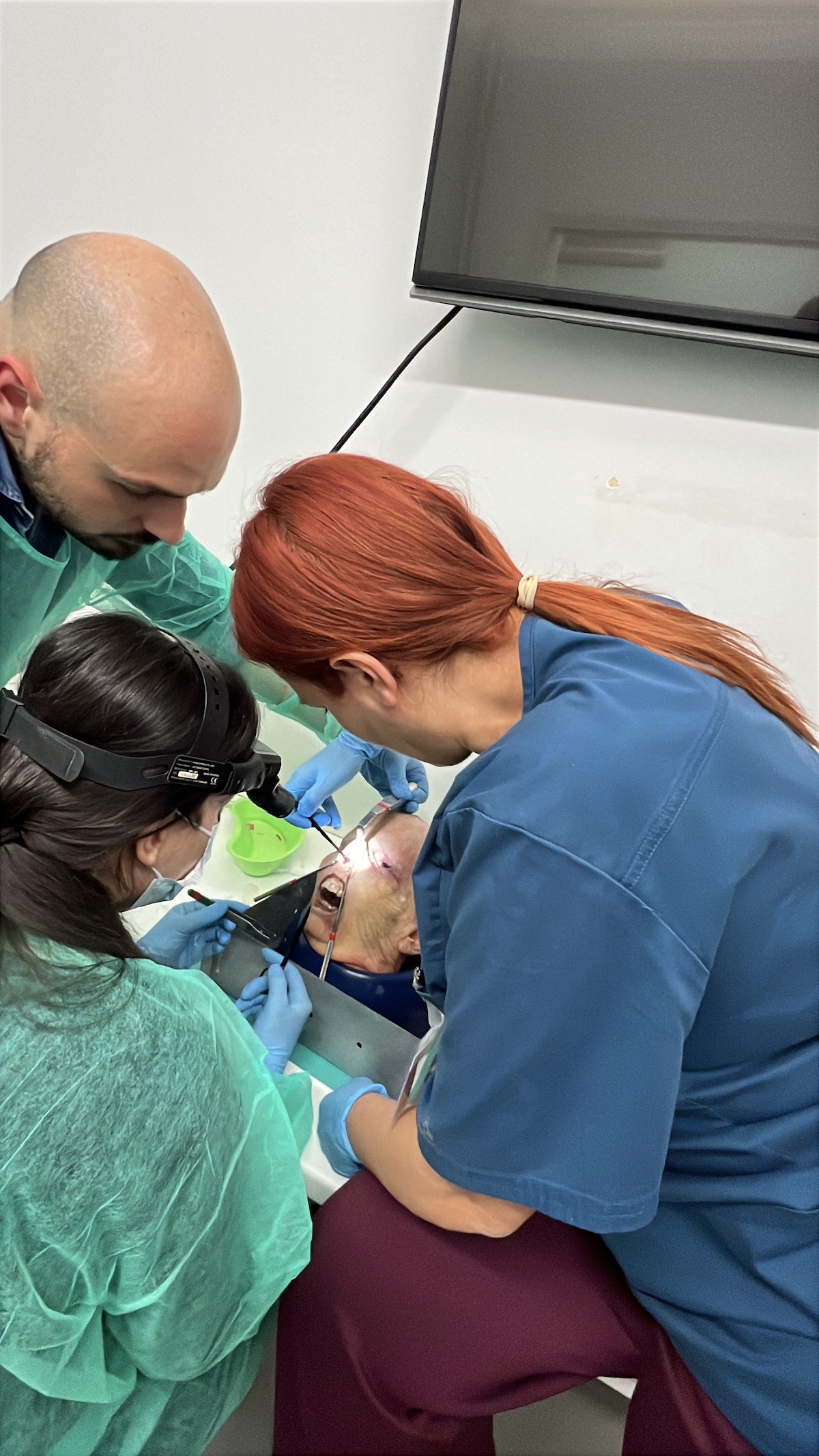
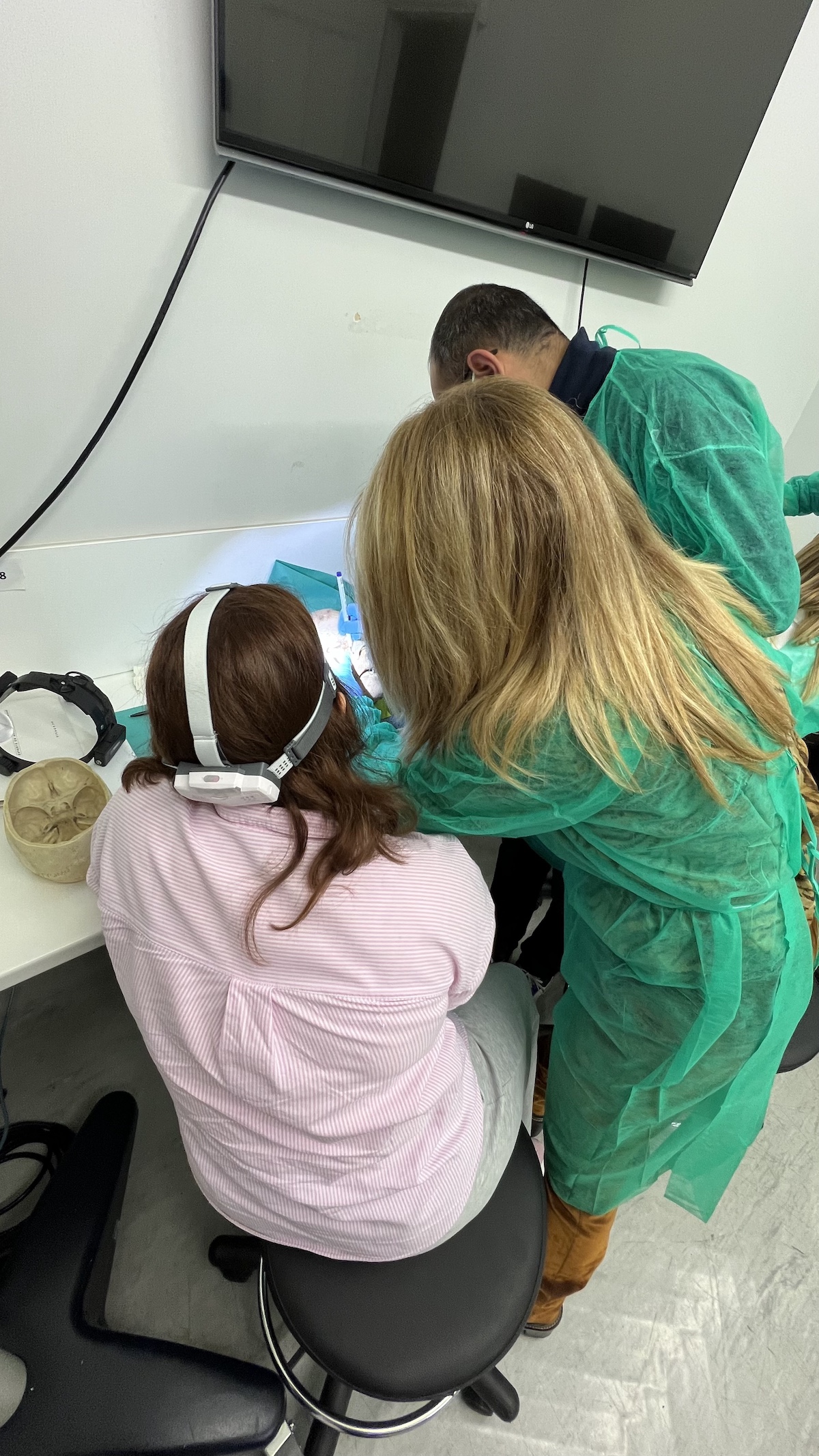
The Rhinoplasty Cadaver Course is a directed practical training programme designed for surgeons seeking structured cadaveric exposure to contemporary rhinoplasty techniques. The format is based on a reproducible operative sequence, combining short teaching sessions, demonstration material and supervised hands-on dissection in fresh-frozen cadaver specimens.
The course focuses on open rhinoplasty dissection, septal work, graft harvesting, dorsal reduction, osteotomies, tip surgery, diced cartilage preparation and related practical modules. Each edition functions both as a real training event and as a documented academic record with official programme material, faculty listings and photographic evidence.
Within the broader structure of the site, this page acts as the central rhinoplasty training hub and connects directly with the editions archive, cadaver courses, surgical training and the professional page of Dr George Mireas.
Quick Facts
Course type
Directed cadaver course
Field
Rhinoplasty
Format
Fresh-frozen cadaver specimens
Supervised hands-on training
Location
Athens, Greece
Documented editions
2024 and 2025
Programme layer
Hellenic Institute of Facial Plastic Surgery
Educational Context
Cadaver-based rhinoplasty teaching occupies a particularly important place in surgical education because it allows participants to study anatomy and operative manoeuvres under realistic conditions while maintaining the structure, safety and pedagogic clarity of a supervised teaching environment.
In rhinoplasty, where technical precision depends on detailed understanding of cartilage handling, septal support, dorsal work, osteotomies and tip architecture, cadaver training offers a direct bridge between theory and operative execution. For this reason, structured cadaver courses are not simply workshops but educational formats that strengthen anatomical judgement and technical confidence.
The pages in this section are therefore designed not only to announce or archive editions, but also to reinforce the academic identity of the programme as part of a wider rhinoplasty education ecosystem.
Core Structure of the Training Format
Each edition follows a structured pathway from preoperative assessment and operating-room setup to septal work, graft handling, dorsal reduction, osteotomies, tip refinement and closure.
The course combines lectures, module-based demonstrations, video support and supervised cadaver dissection with emphasis on direct application rather than abstract theory alone.
Every edition is supported by programme PDFs, faculty records and course images, allowing the training activity to remain academically traceable and historically documented.

Documented Editions
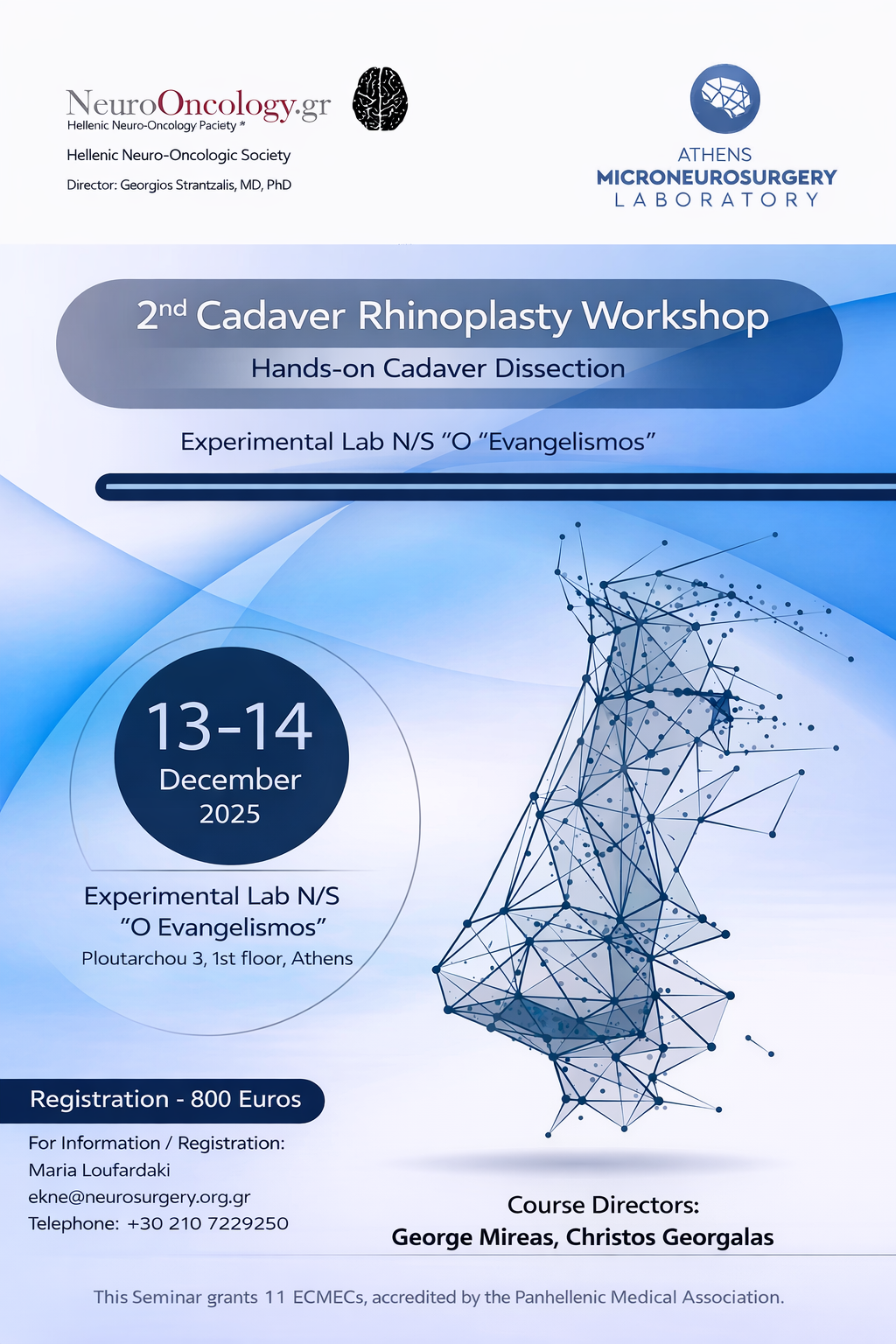
2025 Edition
Date: 13–14 December 2025
Location: Athens, Greece
Hands-on training: 12 hours
The second documented edition expanded the invited faculty layer and continued the same structured practical format in Athens.
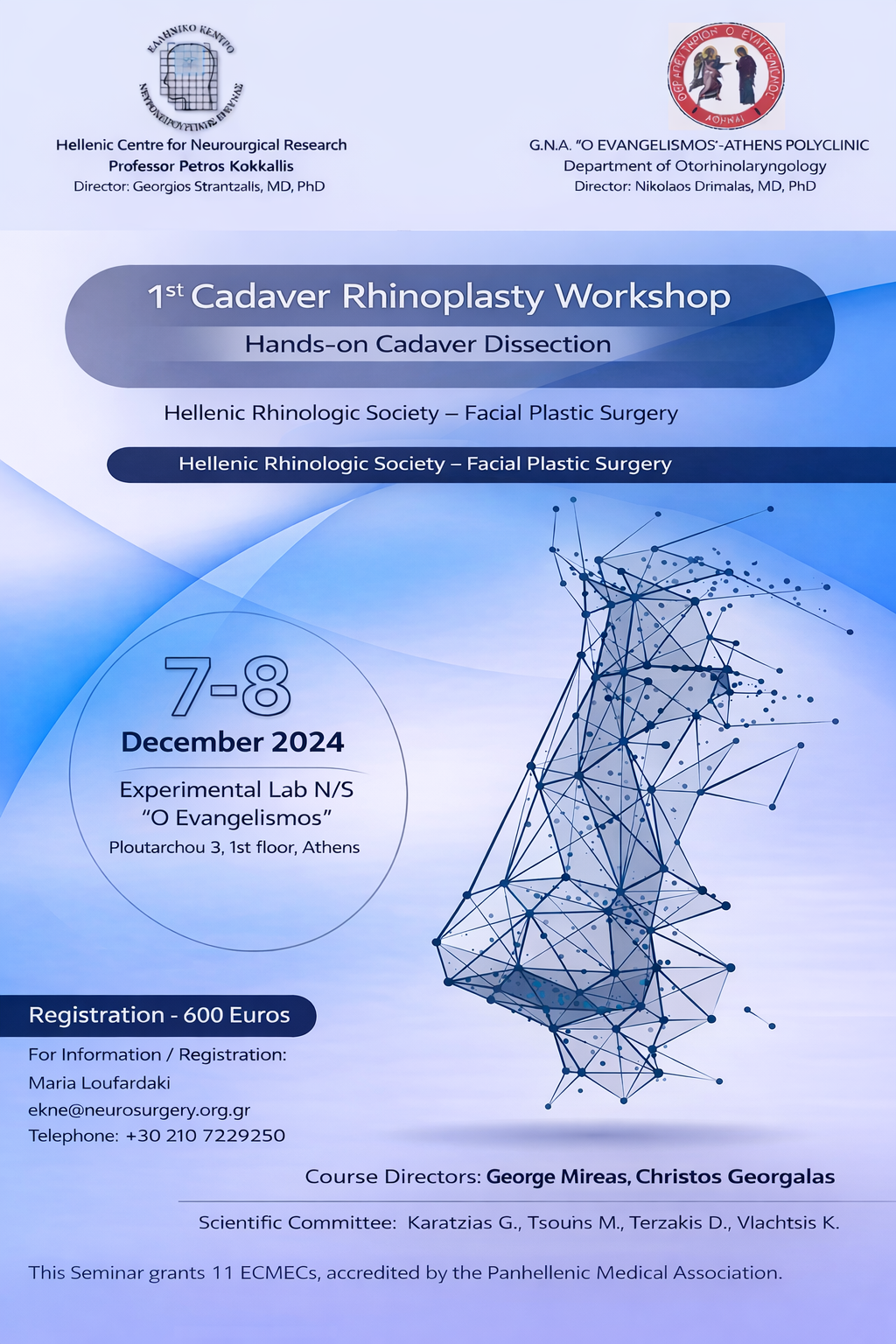
View 2025 Edition2024 Edition
Date: 7–8 December 2024
Location: Athens, Greece
Hands-on training: 11 hours
The first documented edition established the practical academic structure of the course and created the initial archive record of the programme.
View 2024 EditionProgramme Documentation
A defining strength of this course page cluster is that each edition is supported by official scientific programme material. These documents preserve the course title, dates, location, fee structure, faculty, committee information and operative schedule, creating a formal documentary layer that goes beyond simple event photography.
This is especially useful for SEO and academic authority because it creates a deeper evidence structure around the training activity. Search engines and AI systems can understand not only that the course exists, but also how it is organized and repeated across editions.
Over time, this documentation can connect naturally with the future HIFPS site layer, while still reinforcing the authority of the current academic training architecture on georgemireas.com.
- course identity and dates
- venue and format
- training hours
- faculty and committee records
- downloadable scientific programme PDFs
Representative Images from the Programme

How This Page Fits in the Site
This page is the central hub of the rhinoplasty branch inside the directed cadaver courses structure. It sits above the editions archive and below the broader directed-courses layer, helping search engines and users understand the exact place of the programme in the academic hierarchy of the site.
For SEO, this is important because it gives the rhinoplasty course cluster a dedicated parent page with its own educational purpose, rather than relying only on the archive or individual yearly editions. That structure improves topic clarity and supports stronger internal linking between parent and child pages.
For future development, this page also acts as a stable bridge between the current georgemireas.com academic authority structure and the planned HIFPS institutional expansion.
Related Pages
Academic Training Enquiries
For current training pathways, archived editions, course structure and broader academic collaboration context, please use the main programme pages or the contact page.
Go to Contact Page