
Rhinoplasty Cadaver Course – 2025 Edition
This page records the 2025 edition of the directed rhinoplasty cadaver course as part of a structured surgical training pathway focused on cadaveric dissection, operative sequence, graft work, osteotomies, tip surgery and supervised technical application in a faculty-guided educational environment.
Part of the Hellenic Institute of Facial Plastic Surgery cadaver training series.

Edition Overview
The 2025 edition was developed as the second directed cadaver course in the rhinoplasty training pathway, preserving the stepwise operative logic of the first edition while expanding the faculty profile and the broader educational record of the programme.
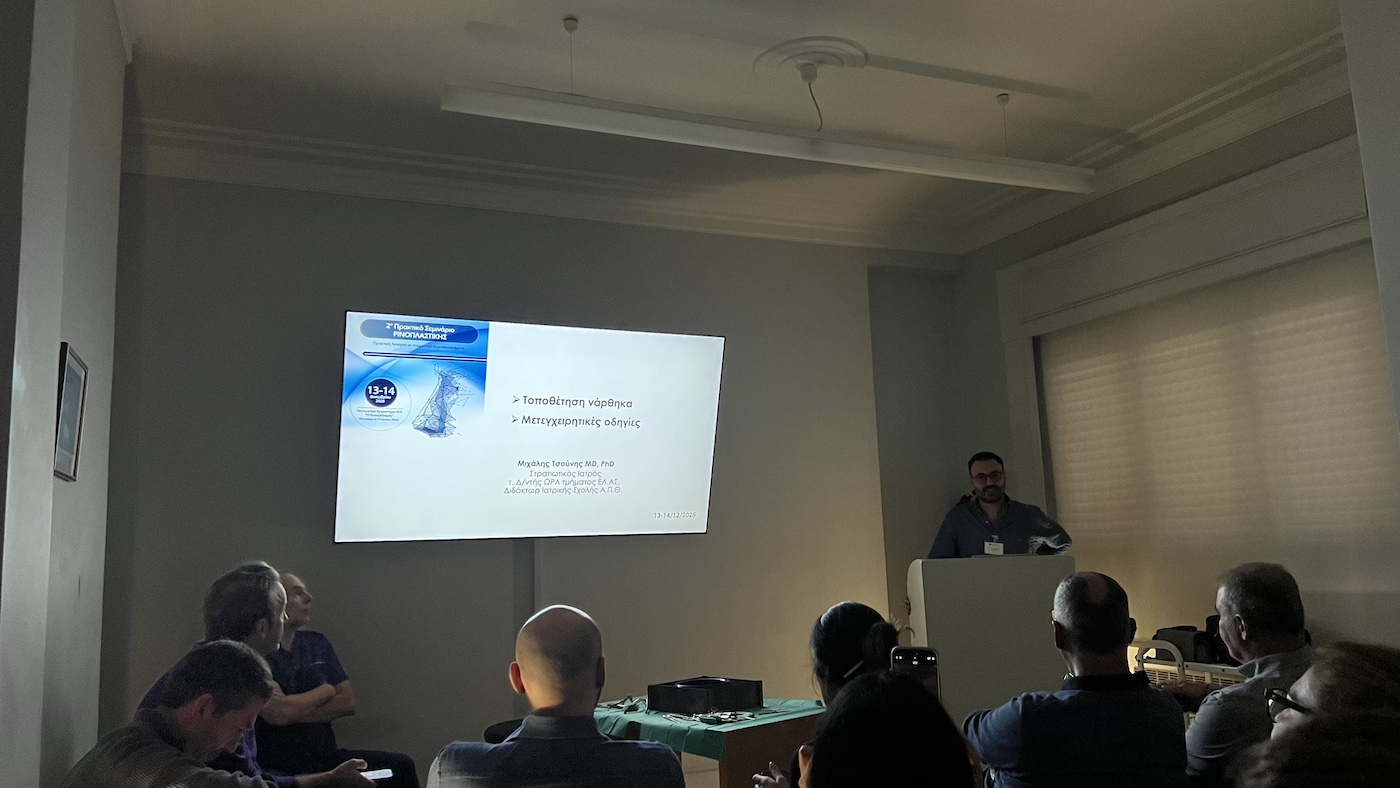
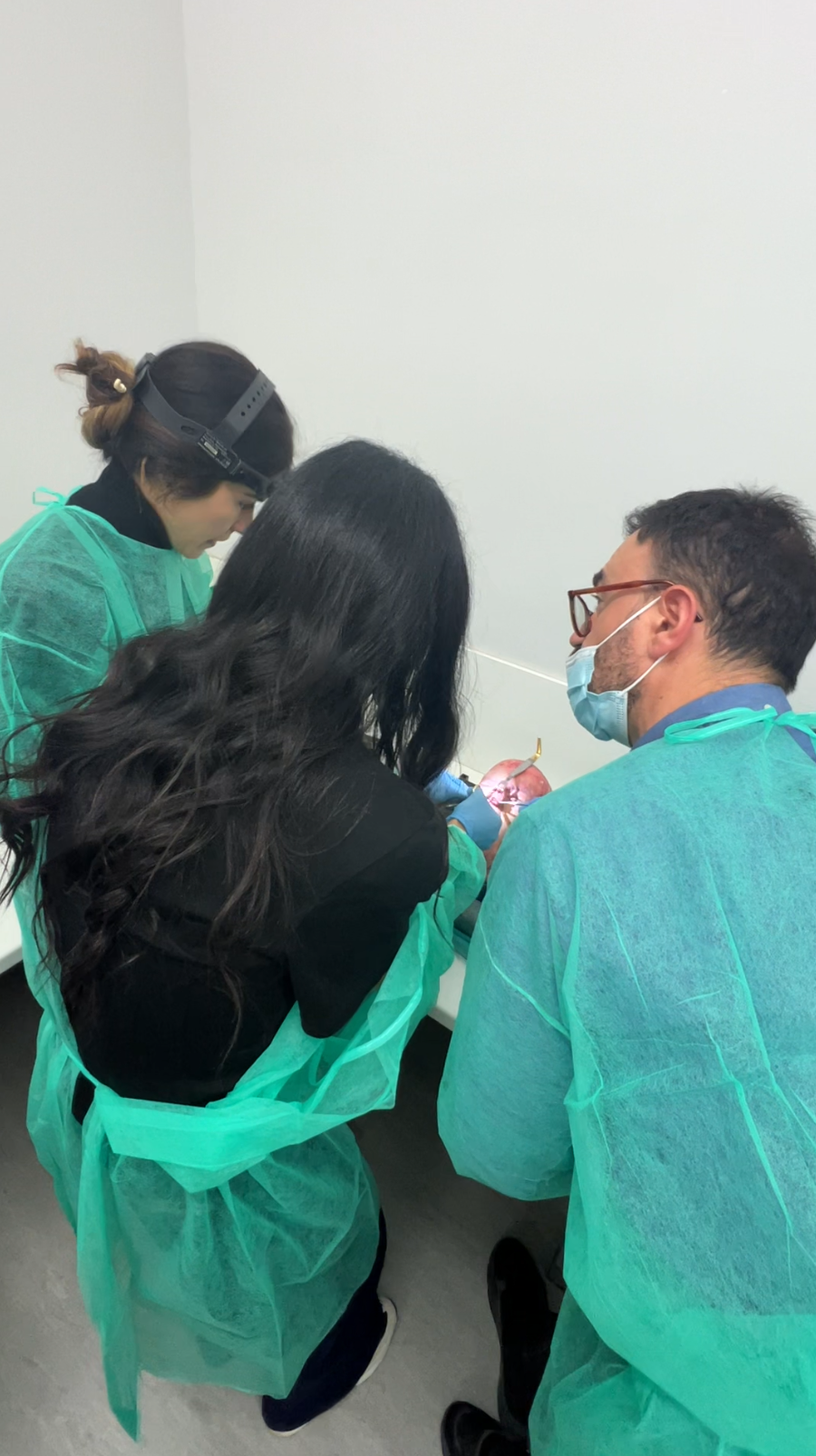
Held in Athens, the course combined lectures, module-based teaching and supervised practical dissection with fresh-frozen cadaver specimens. The educational emphasis remained on reproducible operative sequencing, direct technical application and structured faculty guidance during hands-on training.
As an archived edition page, this section documents the 2025 course within the broader framework of directed rhinoplasty cadaver training, surgical education and the wider professional profile of Dr George Mireas.
Edition Summary
Edition
2025 Athens course
Format
Directed cadaver course with fresh-frozen specimens
Educational focus
Stepwise rhinoplasty dissection, graft work, osteotomies and tip surgery
Teaching model
Faculty-guided practical training with lectures and module-based instruction
Academic context
Part of the HIFPS cadaver training series in Athens

Educational Structure
The 2025 edition followed a sequential operative structure designed to mirror the practical logic of rhinoplasty training in the laboratory setting. Rather than functioning as an isolated technical workshop, the course was organized around an integrated educational progression from analysis and preparation to dissection, structural work and closure.
Core operative sequence
- Preoperative analysis and procedural planning
- Surgical access, dissection and septal preparation
- Graft harvesting and structural graft concepts
- Dorsal work and osteotomy strategy
- Tip refinement, support mechanisms and closure principles
Teaching format
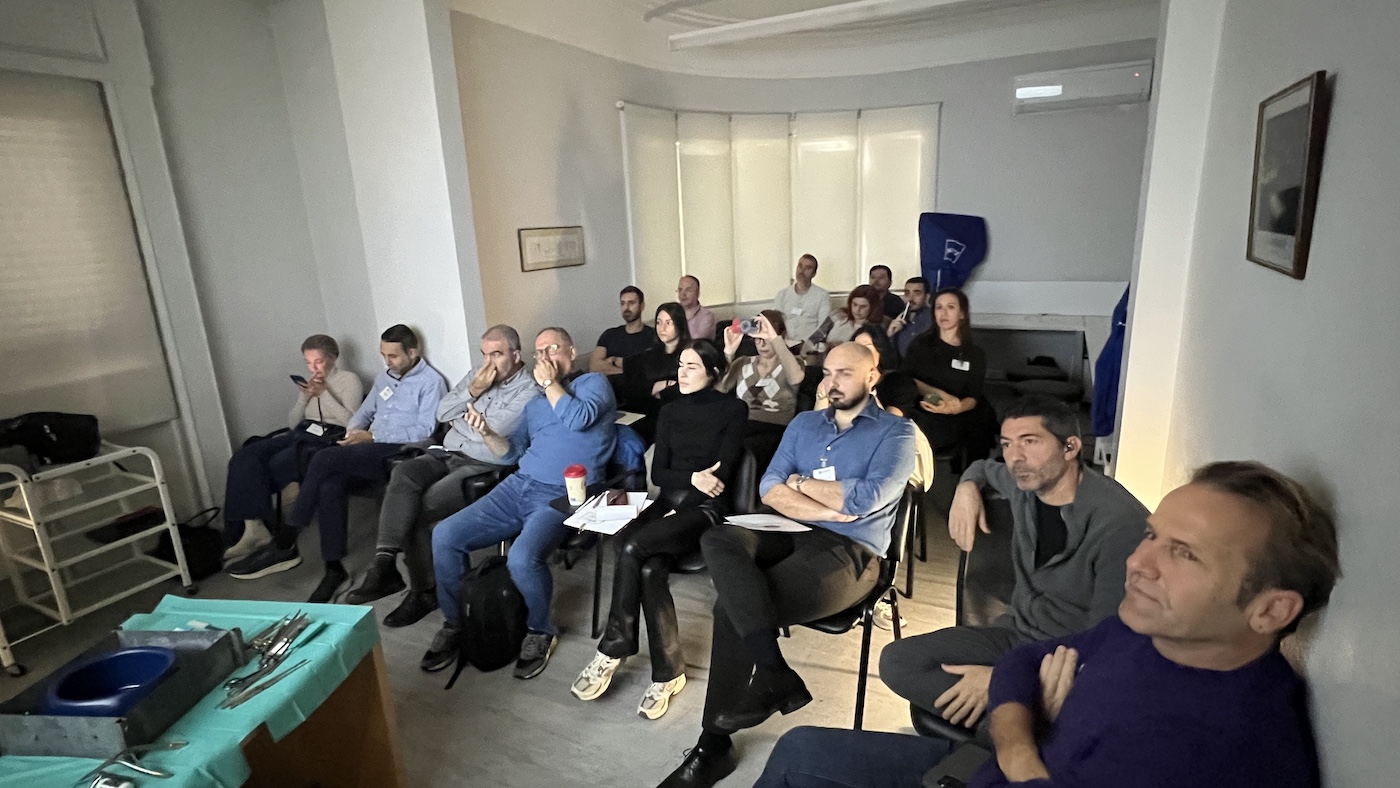
- Module-based faculty instruction
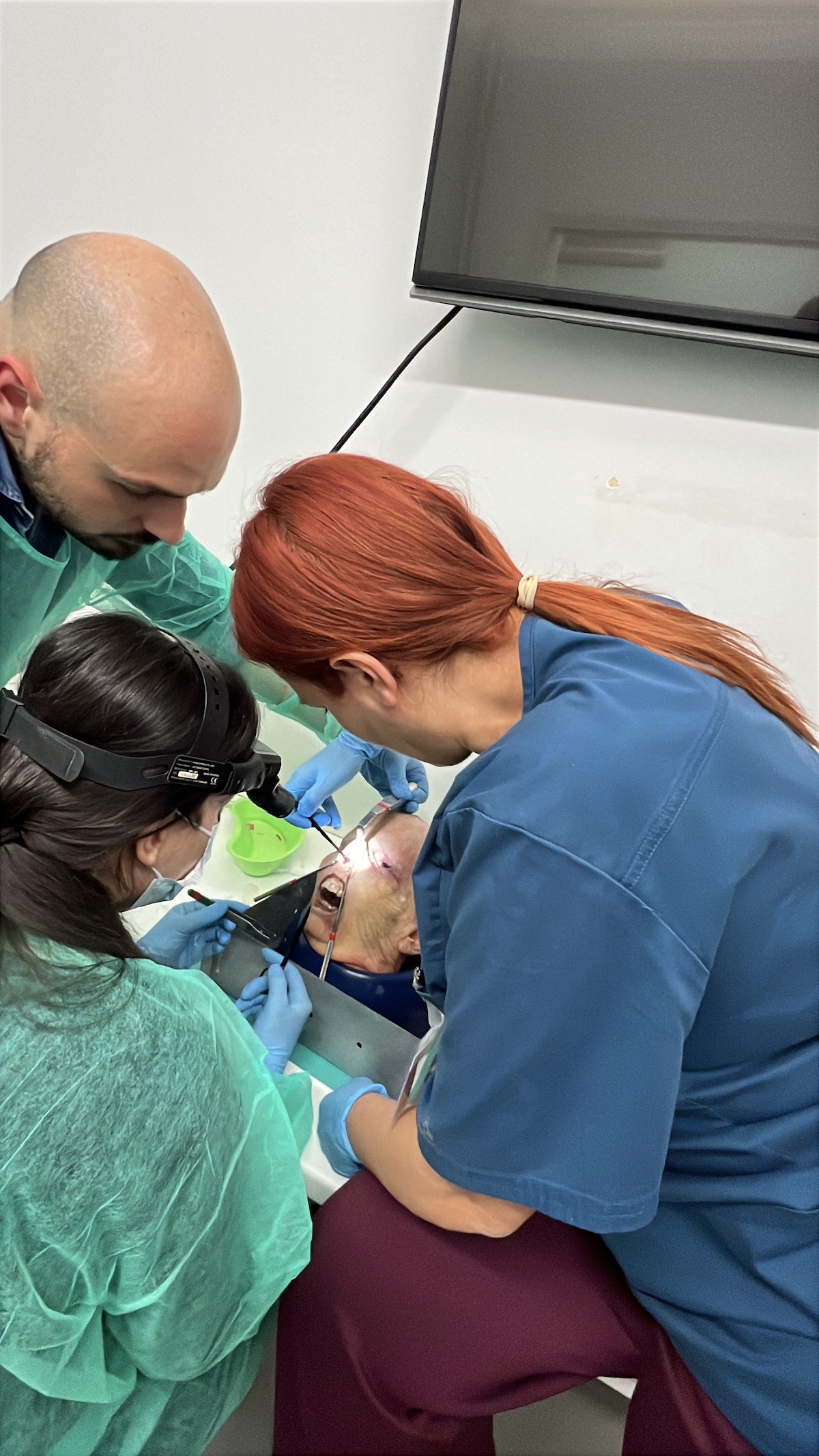
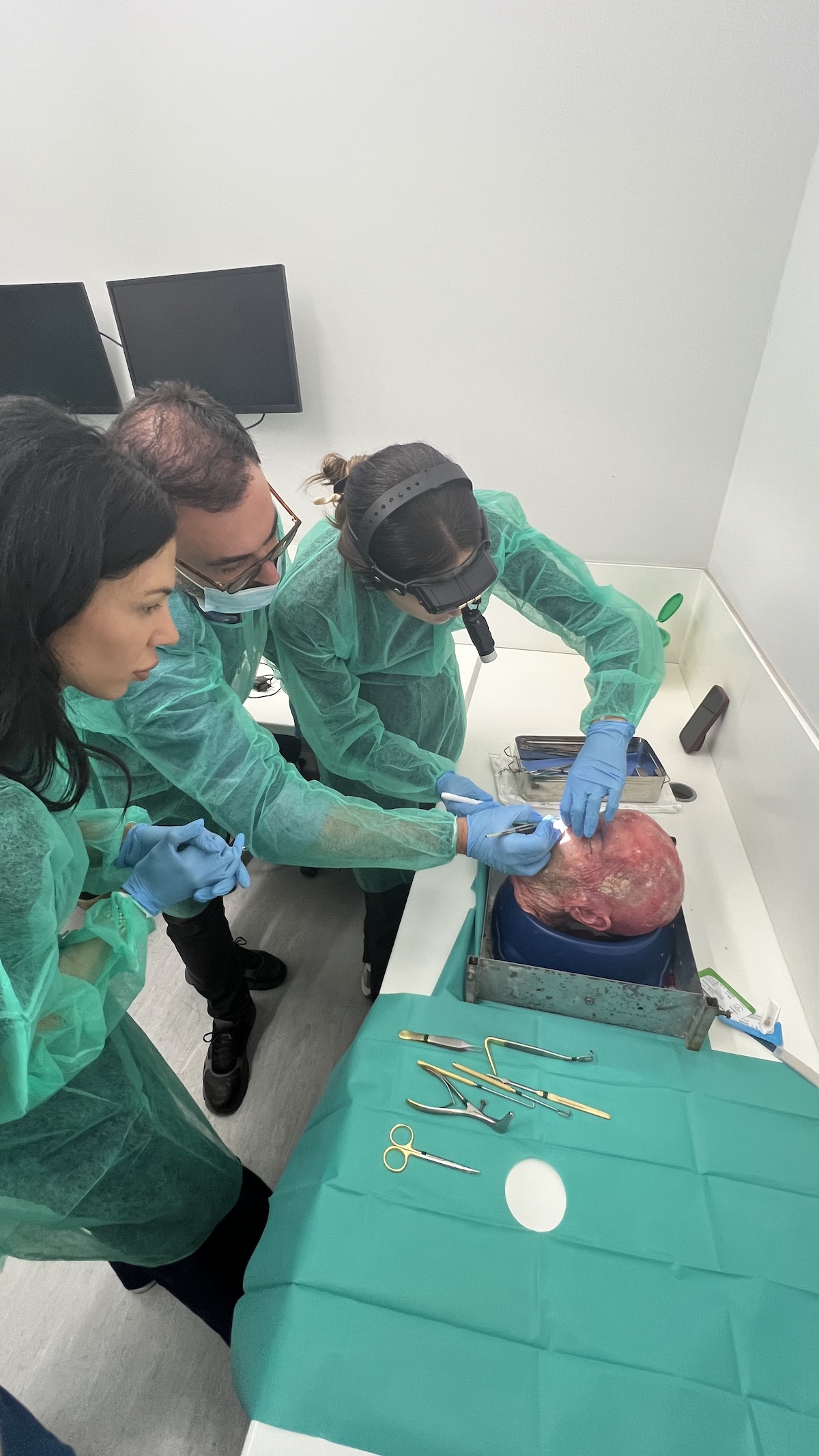
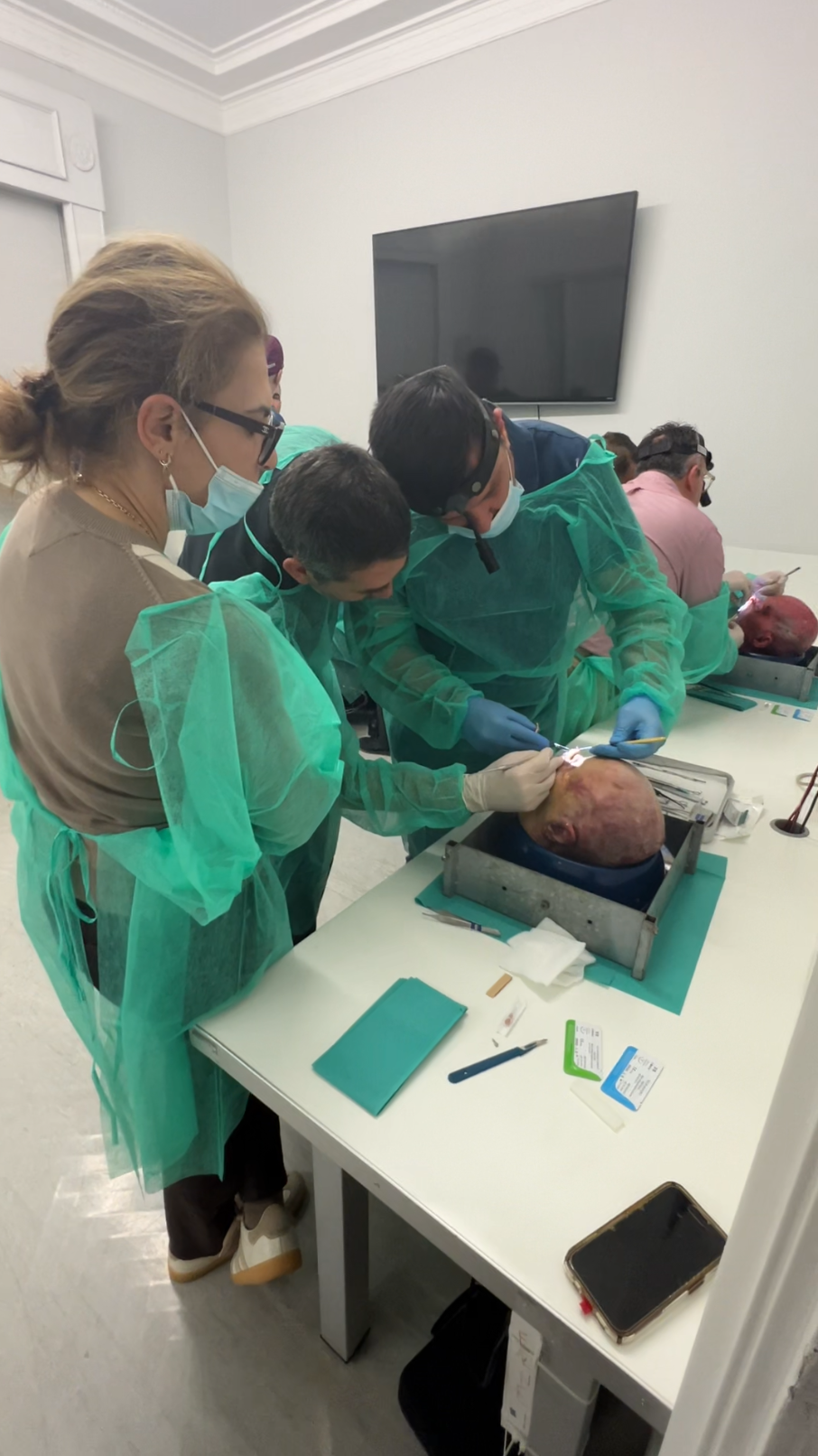
- Hands-on cadaveric dissection
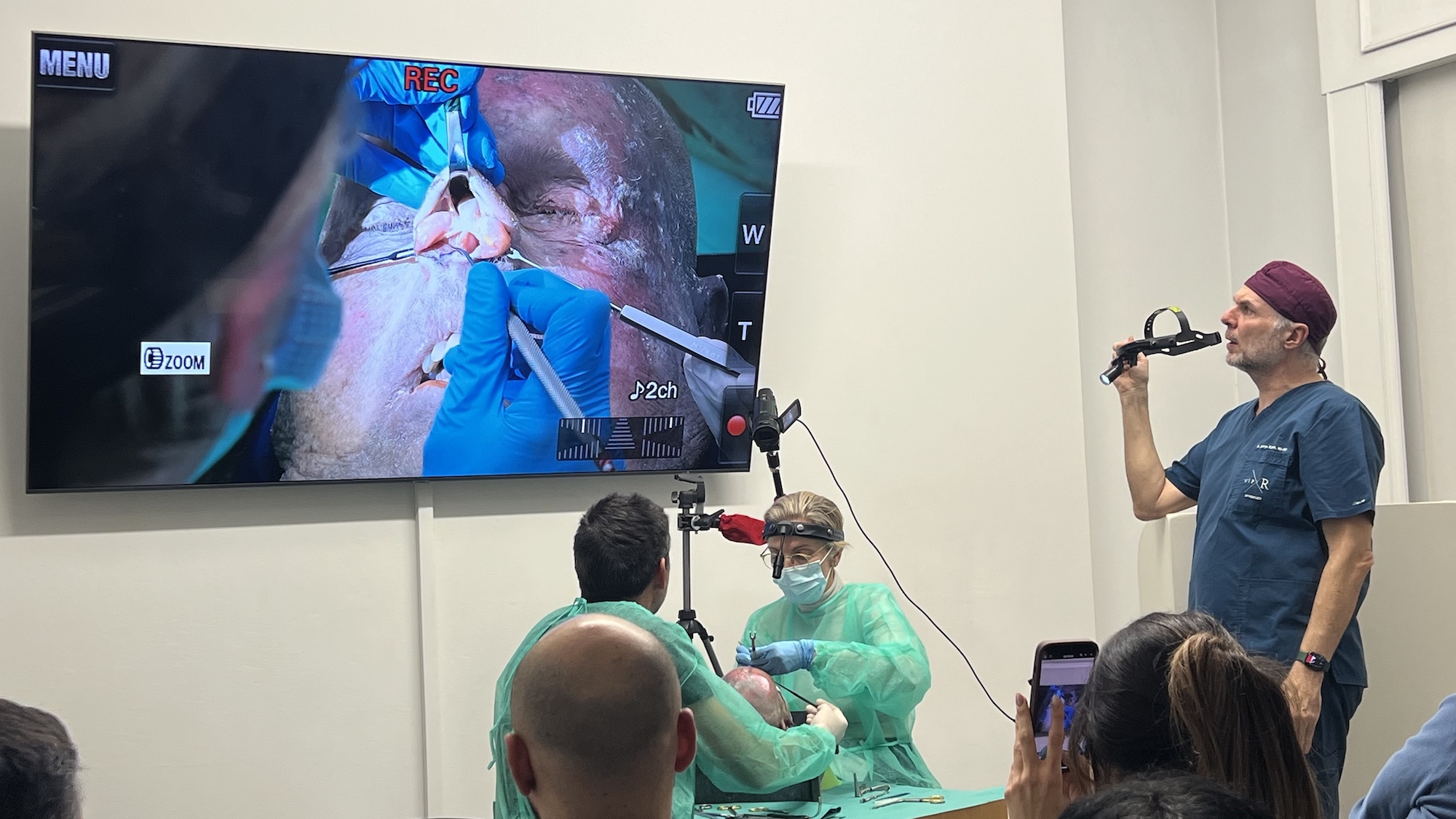
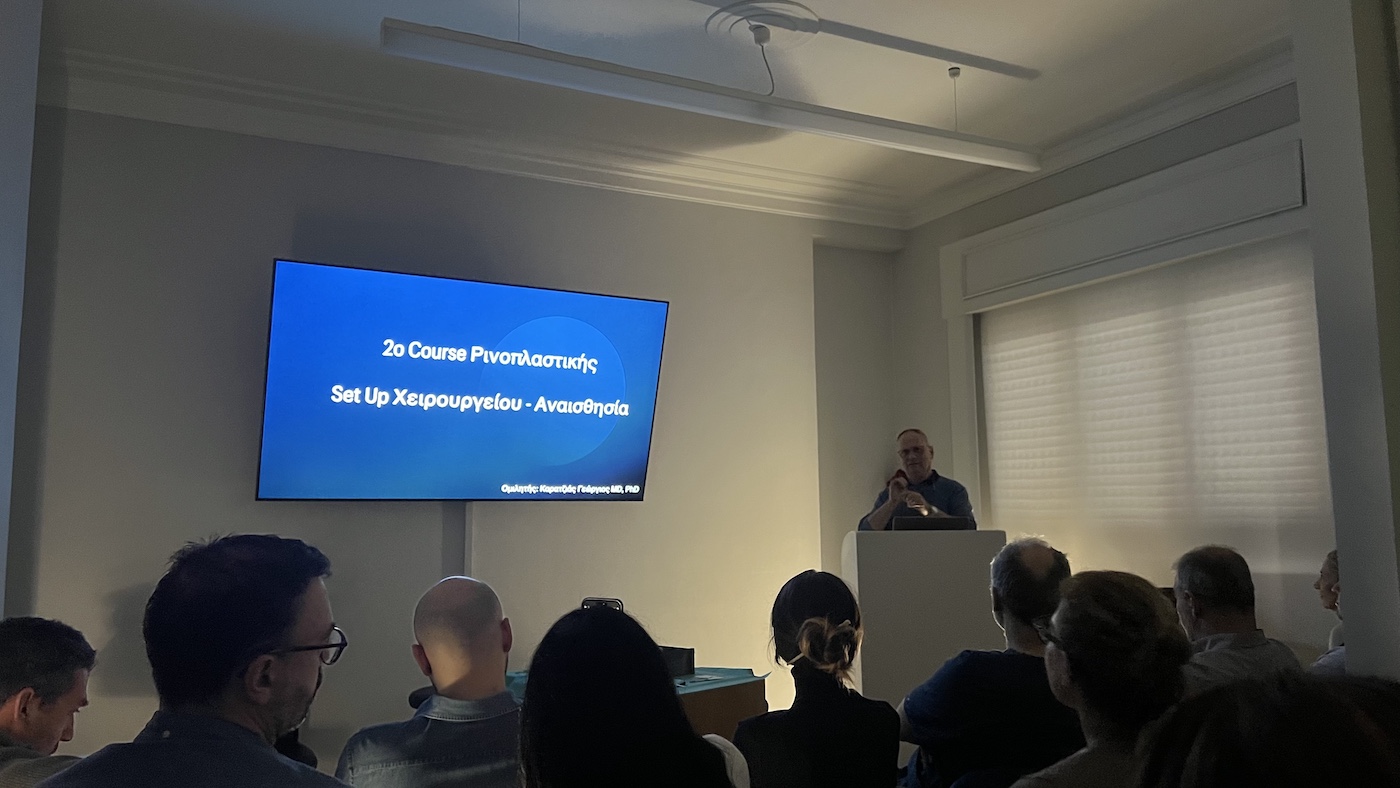
- Video-supported and lecture-based teaching segments
- Direct instructor supervision at workstation level
- Progressive movement from conceptual teaching to practical execution
Educational Highlights
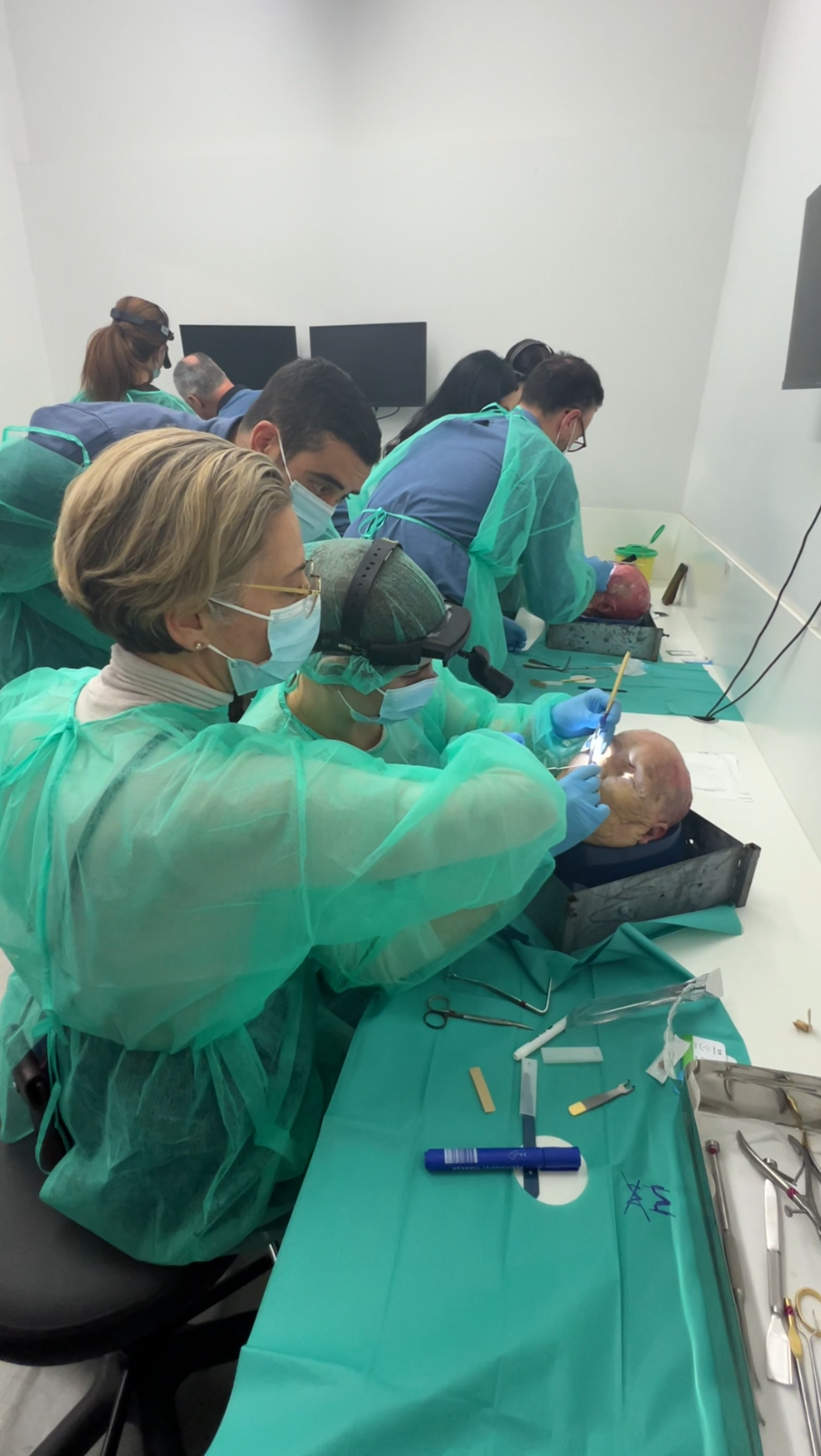
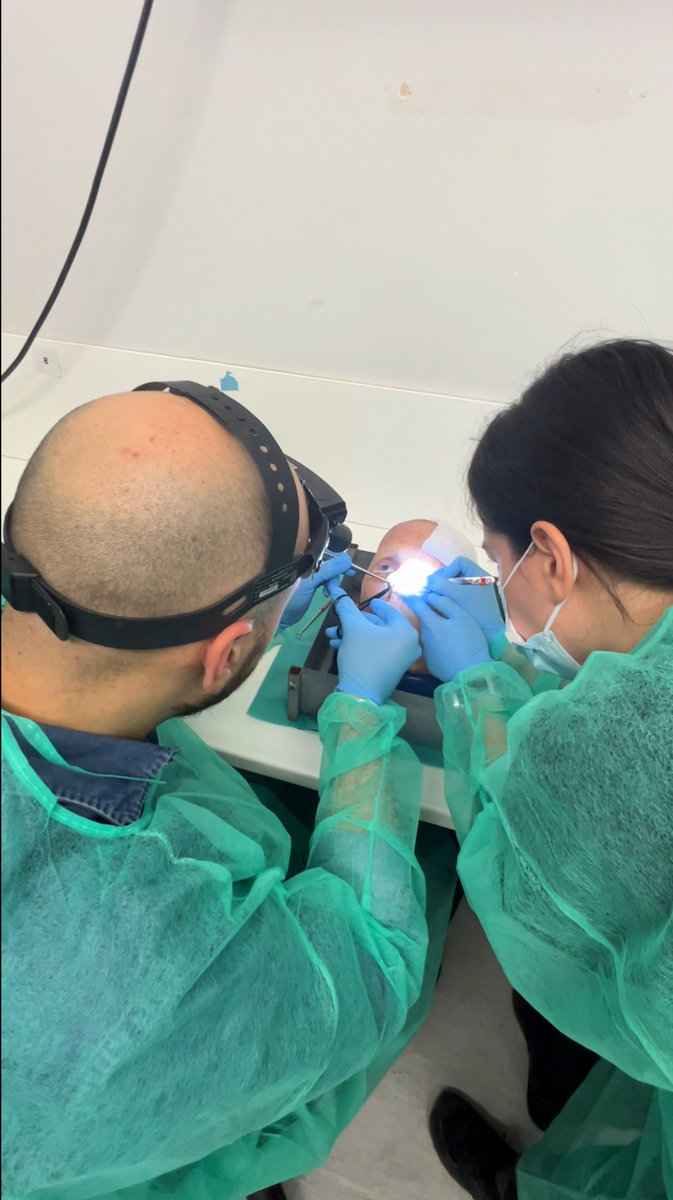
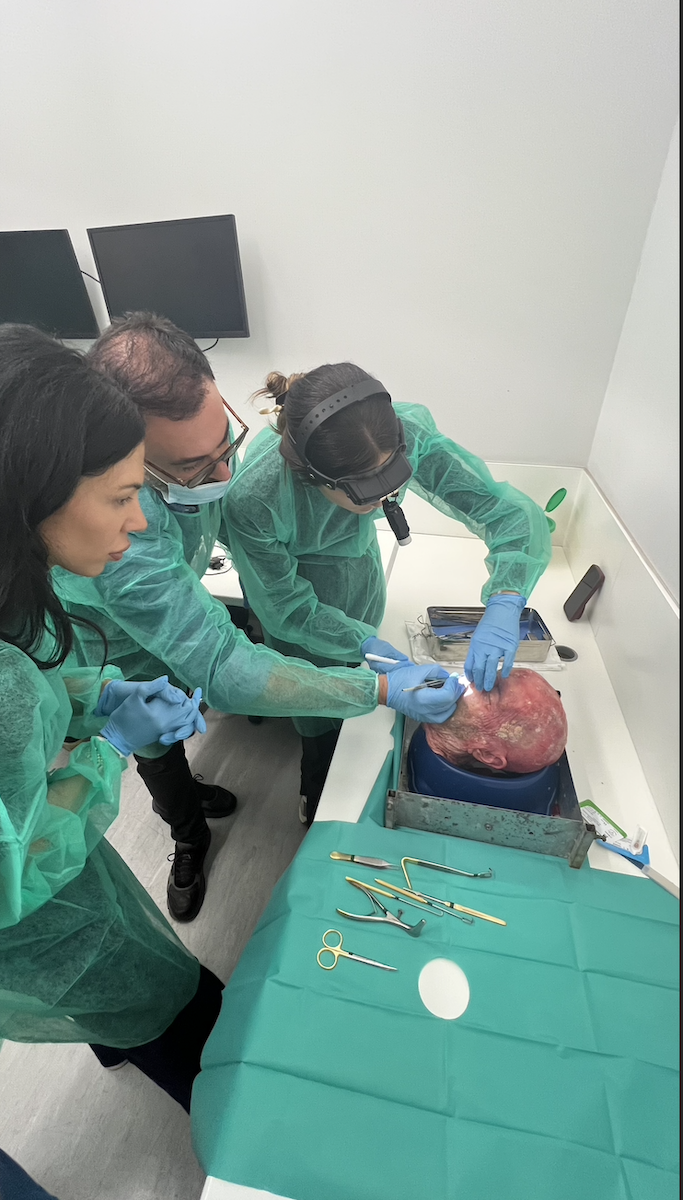
Fresh-frozen cadaver specimens, complete surgical instrumentation and workstation-based practical teaching supported a structured operative learning environment focused on direct anatomical application.
The course combined lectures, module-based teaching, faculty-guided dissection and live practical supervision, with emphasis on reproducible surgical sequence rather than isolated manoeuvres.
The 2025 edition expanded the invited faculty profile while maintaining a coordinated structure centred on supervised hands-on teaching and shared operative discussion.
Selected Moments from the 2025 Edition

Faculty and Coordinators
- George Mireas
- Christos Georgalas
The faculty structure combined course coordination, instructional guidance, operative demonstration and supervised practical teaching across the cadaveric training environment.
Liana Asimakopoulou — MD, PhD, Otolaryngologist, Member of the European Academy of Facial Plastic Surgery
Vasilios Daniilidis — Professor of Otolaryngology, Medical School, University of Patras / Director of the Otolaryngology Clinic, University of Patras, Rio
Neophytos Demetriades — MD, DDS, MSc, Professor, European University of Cyprus, School of Medicine / Program Director of Facial Plastic Surgery and Maxillofacial Surgery, Nicosia, Cyprus
Christos Georgalas — Professor of Head and Neck Surgery, University of Nicosia / Director of the Head, Neck and Skull Base Clinic, Hygeia Hospital
Garyfalia Lekakis — MD, PhD, FRCS (ORL-HNS), EBFPRS / Hopitaux Iris Sud, The Clinic, Brussels, Belgium
George Mireas — MD, PhD, Director of Mediterraneo Hospital Plastic Surgery Center, Athens
Michalis Tsounis — MD, PhD, Director of the ENT Department of Health of the Hellenic Police / Director of the Department of Functional Rhinoplasty of “Lito” Hospital
Scientific Committee
- George Mireas — MD, PhD, Director of Mediterraneo Hospital Plastic Surgery Center, Athens
- Christos Georgalas — Professor of Head and Neck Surgery, University of Nicosia / Director of the Head, Neck and Skull Base Clinic, Hygeia Hospital
- Neophytos Demetriades — MD, DDS, MSc, Professor, European University of Cyprus, School of Medicine / Program Director of Facial Plastic Surgery and Maxillofacial Surgery, Nicosia, Cyprus
Academic Record
This edition is documented through faculty participation, course photography and the official scientific programme, which together preserve the educational record of the Athens 2025 course.
Operational details such as registration handling or administrative communication are not central to the long-term academic role of this archive page.
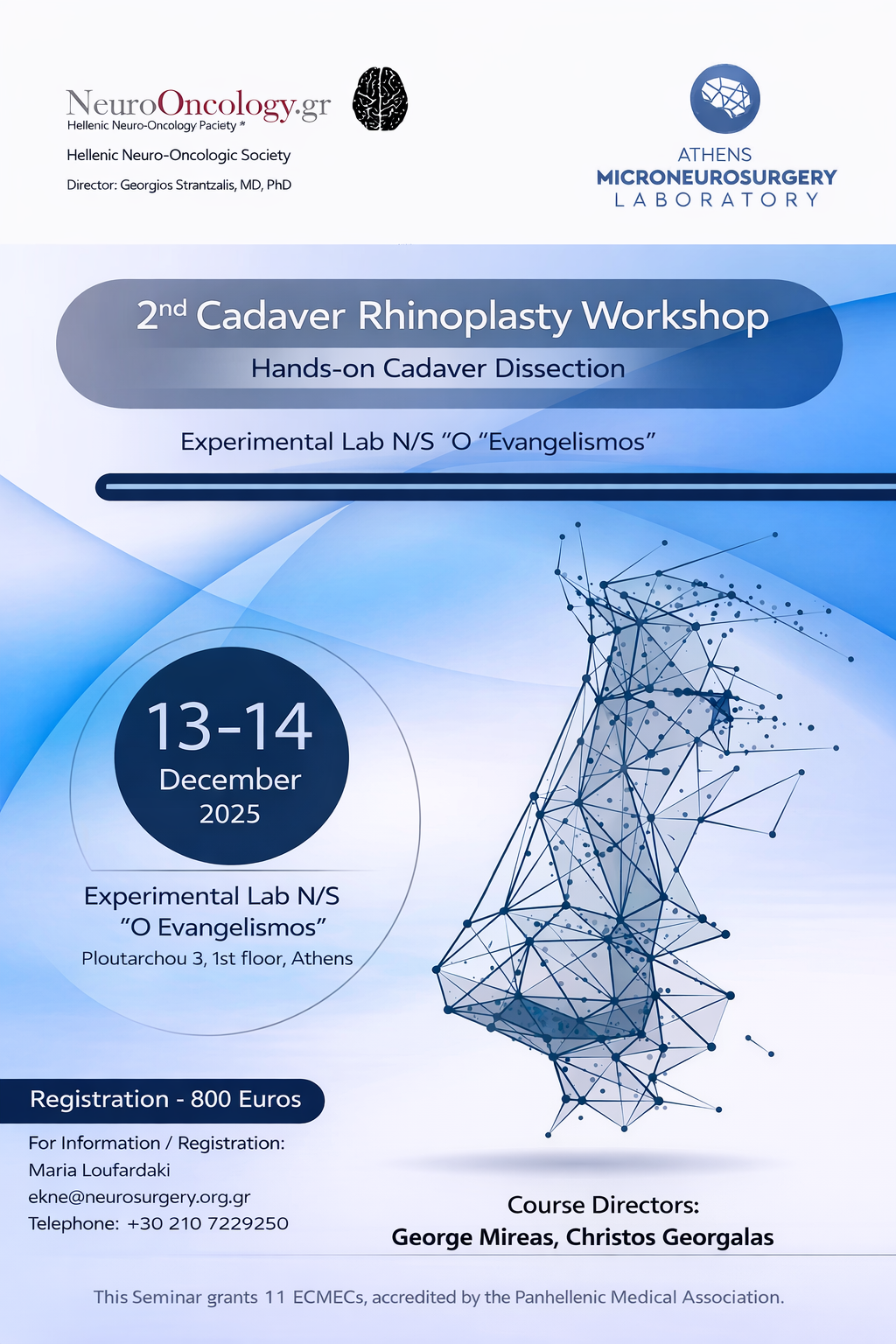
Official Programme Record
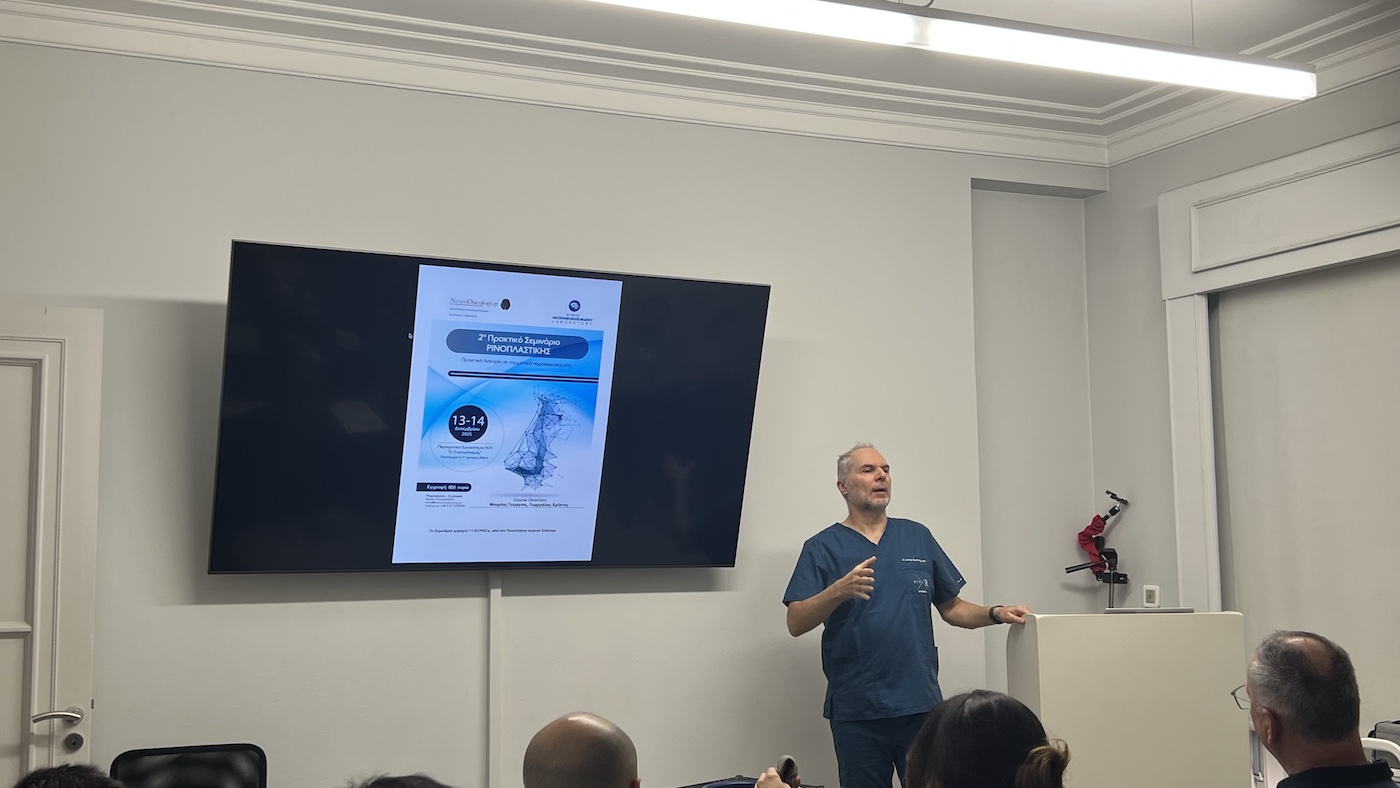
The official programme of the 2025 edition provides an important documentary layer for this archive page. It records the identity of the course, the Athens venue, the faculty structure and the formal scientific framework of the two-day training edition.
For directed cadaver course pages, this type of material is valuable because it complements the photographic archive by showing formal organization, scientific structure and the broader instructional context of the course.
Together with the images from the training environment, the programme supports the academic record of the 2025 edition within the wider rhinoplasty education section of the site.
- official course identity
- Athens edition documentation
- faculty and scientific committee record
- formal educational structure
- scientific programme in PDF format
Training Environment and Educational Format
- Fresh-frozen cadaver specimens
- Complete surgical instrumentation at workstation level
- Video-supported teaching before selected modules
- Faculty-guided supervised practical dissection
The page records the educational characteristics of the course as an edition archive rather than functioning as a registration page.
Administrative or participation-specific details belong to the operational layer of a programme and are intentionally kept secondary here.
Training Environment Gallery
Related Pages
Academic Training Enquiries
For the wider academic context of the cadaver training pathway, please use the main programme pages or the contact page.
Go to Contact Page